.jpg)
Camino Frances
Saint-Jean-Pied-de-Port to Santiago
The Full Experience
Self-Guided
Walk the full Camino Francés from Saint-Jean-Pied-de-Port to Santiago de Compostela, an 800 km journey through the heart of northern Spain. Cross the Pyrenees, wander through medieval towns like Pamplona, Burgos, and León, and traverse diverse landscapes from Rioja vineyards to the high plains of the Meseta. Experience the spiritual, cultural, and physical richness of this ancient pilgrimage, resting in welcoming accommodations and sampling regional cuisine along the way.

%20(1).avif)
BOOKING OPTIONS
1 Mar 2026 - 31 Oct 2026
HIGH SEASON
PRICE (pp)
$6,956
|
SINGLE SUPPLEMENT
$2,940
%20(8).png)
1 Mar 2027 - 15 Nov 2027
HIGH SEASON
PRICE (pp)
$6,850
|
SINGLE SUPPLEMENT
$2,975
DETAILS
*All prices are from per person, based on twin-share accommodation. $200 discount already applied.
.jpg)
Overview
Walk the full Camino Francés from Saint-Jean-Pied-de-Port to Santiago de Compostela, an 800 km journey through the heart of northern Spain. Cross the Pyrenees, wander through medieval towns like Pamplona, Burgos, and León, and traverse diverse landscapes from Rioja vineyards to the high plains of the Meseta. Experience the spiritual, cultural, and physical richness of this ancient pilgrimage, resting in welcoming accommodations and sampling regional cuisine along the way.
TRIP DETAILS
COST
LENGTH
DISTANCE
DIFFIFCULTY
A$6,956*
37 Days
790KM
Hard
MONTH TO VISIT
JAN
FEB
MAR
APR
MAY
JUN
JUL
AUG
SEP
OCT
NOV
DEC
GOOD
OK
BAD
%20(8).png)
TRIP DETAILS
MONTH TO VISIT
JAN
FEB
MAR
APR
MAY
JUN
JUL
AUG
SEP
OCT
NOV
DEC
GOOD
OK
BAD
A$6,956*
37 Days
790KM
Hard
COST
LENGTH
DISTANCE
DIFFIFCULTY
Trip Details
COST
A$6,956*
LENGTH
37 Days
DISTANCE
790KM
DIFFIFCULTY
Hard
Month to Visit
J
F
M
A
M
J
J
A
S
O
N
D
GOOD
OK
BAD
"As a solo female walker, I wanted something that felt supported but still independent. Tierra Trekking nailed it. The itinerary was clear, the walking notes were spot on, and every accomodation felt safe, clean, and comfortable. Would definitely recommend."
Luciana M
July 2025
"My partner and I walked from Porto to Santiago with Tierra Trekking and it was such a memorable experience. Everything was taken care of. We felt like we could really enjoy the journey without any stress. A perfect mix of adventure and comfort."
Sarah G
July 2025
"This was my first Camino and I’m so glad I booked through Tierra Trekking Co. Everything was organised beautifully. I especially appreciated the pre-trip guidance. It made the whole experience feel more relaxed and enjoyable."
Vince P
July 2025
"Had a fabulous time walking the last 100km of the Camino Frances with Tierra Trekking Co. This had been a bucket list item for many years for me. Glad I chose Tierra Trekking Co. They handled everything. I found the pre-trip guidance particularly useful."
Pattie C
July 2025
"My partner and I walked the Portuguese Camino and it was an incredible shared adventure. The accommodations were charming and always well located. We loved having our bags moved each day so we could just focus on enjoying the walk (and the wine!). Great value and really personal service."
Daniel M
May 2025
"I was looking around at different self-guided camino companies as I was a bit unsure of doing this completely on my own as a solo female. In my early communications with Ben, I knew I had made the right choice! He gave me great tips & advice before the trip and I felt super supported from the get-go."
Krista A
Apr 2025
"Absolutely loved each day on the Portuguese Coastal Camino. The scenery was stunning. Ben had everything organised perfectly - would 100% recommend!"
Alex B
June 2025
%20(1).avif)
.avif)

.avif)
.avif)
.avif)

.avif)
.avif)
.avif)

.avif)
.avif)
%20(1).avif)
.avif)
%20(1).avif)
.avif)

.avif)
.avif)
.avif)
.avif)
.avif)
.avif)
.avif)

.avif)
.avif)
.avif)
.avif)

ITINERARY


_edited.jpg)
.jpg)
.jpg)
.jpg)
.jpg)
.jpg)
.jpg)
.avif)
.avif)
.jpg)
.jpg)
.jpg)
.jpg)
.jpg)
_edited.png)
.jpg)

.jpg)
%20(1).avif)

Arrive in the historic town of Saint-Jean-Pied-de-Port, nestled in the foothills of the Pyrenees. This charming French village is the traditional starting point of the Camino Francés. Wander the cobbled streets, explore the medieval citadel, and pick up your pilgrim credential. Take time to enjoy the local Basque cuisine and prepare mentally and physically for the journey ahead.
Day 1: Arrival in Saint-Jean-Pied-de-Port
Begin your pilgrimage with a challenging but unforgettable ascent over the Pyrenees. The path climbs steadily through open pastures, pine forests, and wide mountain vistas before crossing into Spain. Descend into Roncesvalles, home to a historic Augustinian monastery that has welcomed pilgrims for centuries. This stage is a powerful physical and emotional introduction to the Camino. Expect a demanding uphill section, followed by a long descent through forested switchbacks on uneven but well-marked mountain trails.
Day 2: Saint-Jean-Pied-de-Port to Roncesvalles (25km)
Descend gently through beech and oak forests, passing through tiny Basque villages like Burguete and Espinal, with their traditional whitewashed houses and red shutters. The walk leads you across ancient bridges into Zubiri, a quaint riverside town known for the Puente de la Rabia. Terrain is mixed today, with soft forest paths and some steep, rocky descents that require care in wet conditions.
Day 3: Roncesvalles to Zubiri (21km)
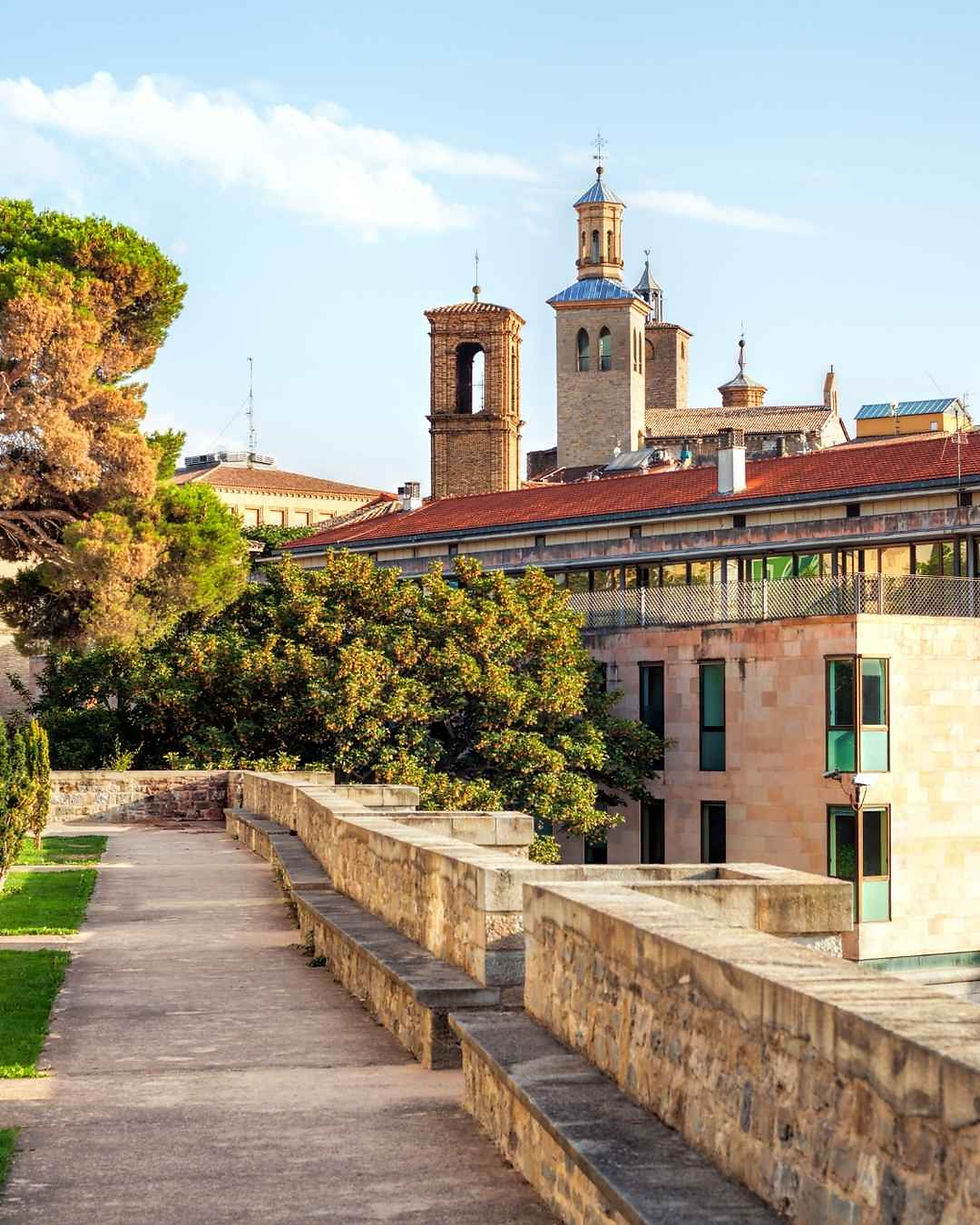
Follow the Arga River through farmlands and wooded areas before reaching Pamplona, the capital of Navarra. Explore the city’s Gothic cathedral, citadel walls, and bustling old town, made famous by the Running of the Bulls. This stage transitions from quiet countryside to lively urban energy. The trail is mostly gentle, with a mix of riverside tracks, paved sections, and gradual inclines.
Day 4: Zubiri to Pamplona (20km)
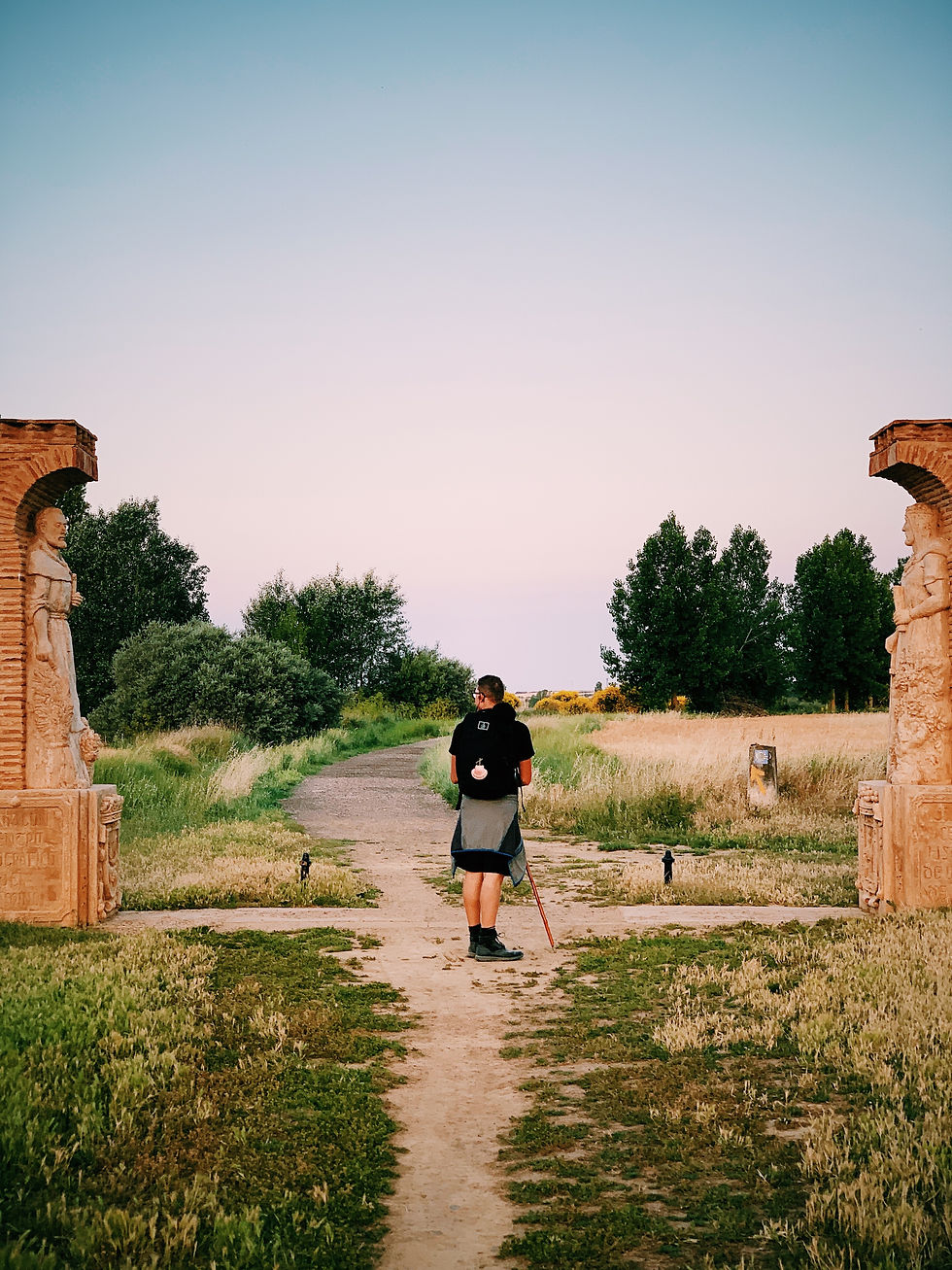
Leave Pamplona behind and ascend to the Alto del Perdón, where a striking metal sculpture of pilgrims marks the horizon. From here, descend through rolling wheat fields and olive groves to Puente la Reina, a medieval town named after its beautiful 11th-century bridge. This is a day of contrasts—windy ridgelines, broad views, and quiet villages. The ascent to the ridge is moderate but exposed; the descent is rocky in places, eventually leading to smooth farm tracks.
Day 5: Pamplona to Puente la Reina (24km)
Walk past vineyards, olive trees, and fields dotted with tiny Romanesque churches. Enjoy the peace of the Valdizarbe region before arriving in Estella, a lively town known for its architecture and traditional gastronomy. The journey is pleasant, with rolling countryside and a few short climbs. Surfaces vary between gravel paths and country lanes, making for a comfortable and scenic day.
Day 6: Puente la Reina to Estella (22km)
Today’s walk takes you past the famous Irache Wine Fountain, where pilgrims can enjoy a sip of local red wine straight from the tap. Continue through open farmland and quiet paths toward Los Arcos, a peaceful village with a welcoming plaza and historic church. This stretch is mostly exposed and sun-drenched, so an early start is advised. The trail is wide and flat for much of the day, with a few mild inclines.
Day 7: Estella to Los Arcos (21km)
Cross into the region of La Rioja, Spain’s premier wine country. The route passes through small villages and vast vineyards before arriving in Logroño, a vibrant city famous for its tapas scene on Calle Laurel. A longer walking day, but full of energy and reward. Terrain includes undulating trails, gravel roads, and some paved stretches closer to the city.
Day 8: Los Arcos to Logroño (28km)
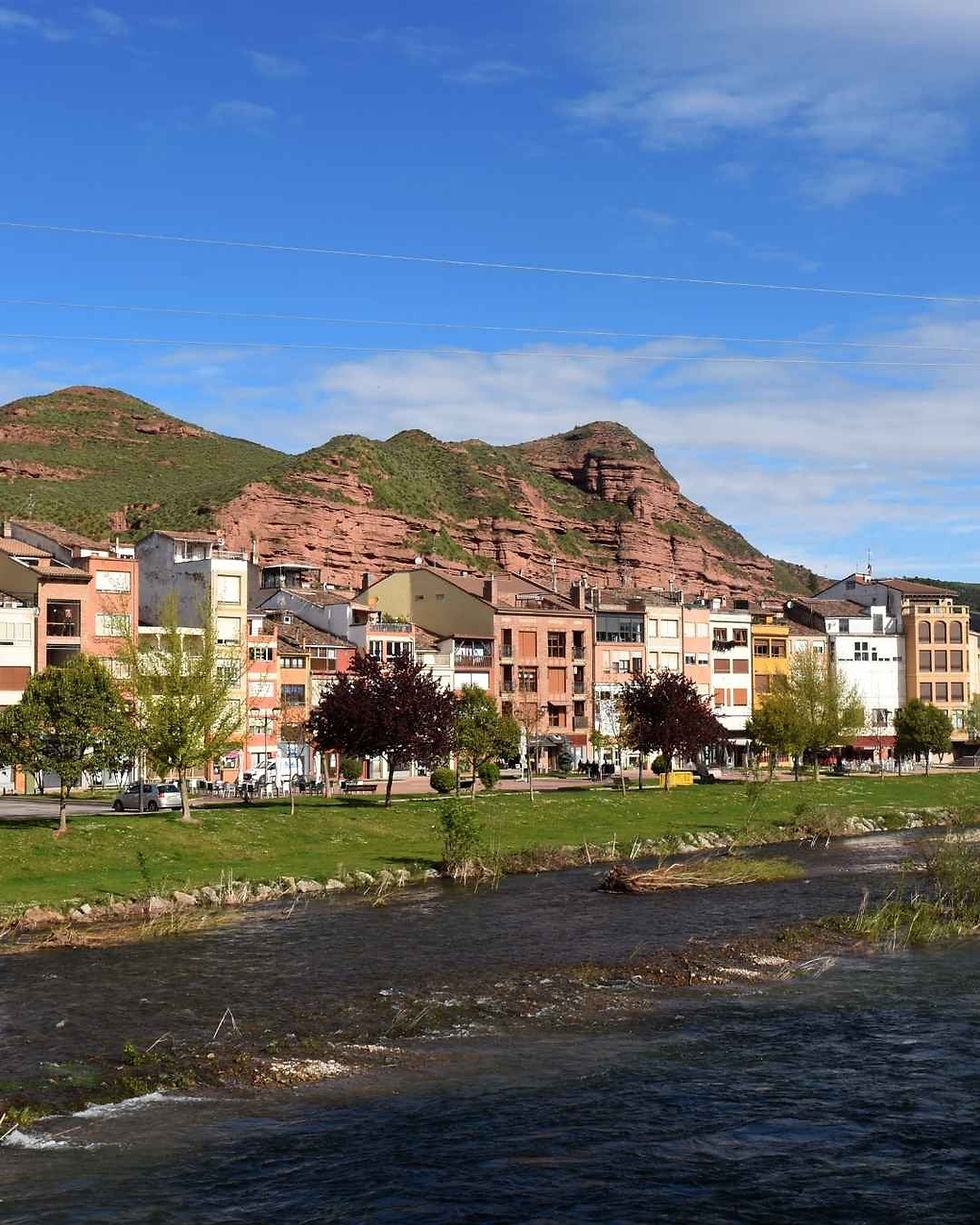
Leave the city of Logroño behind and follow the trail into the heart of La Rioja, Spain’s celebrated wine region. Pass through vineyards, pine forests, and olive groves as you make your way to Navarrete, a hilltop village known for its beautiful Baroque church and rich winemaking tradition. Continue across gently rolling terrain, often accompanied by rows of vines stretching into the distance, before reaching the red cliffs and riverside setting of Nájera. Once a seat of royalty, the town is home to the impressive Monastery of Santa María la Real and is steeped in medieval history. The walk is long but steady, with moderate undulations and a mix of dirt tracks, paved sections, and wide agricultural trails offering a rhythmic, varied day on the Camino.
Day 9: Logroño to Nájera (29km)
Depart Nájera in the quiet morning light and walk through a peaceful landscape of grain fields, wooded paths, and small farm hamlets. The path winds toward Santo Domingo de la Calzada, a town legendary among pilgrims for its miracle of the chickens — a story immortalized in its grand cathedral, where a live rooster and hen are still kept today. The town has long been a haven for pilgrims and boasts a fascinating blend of Gothic, Romanesque, and Baroque architecture. Today’s stage is a gentle one, with wide-open skies, well-maintained gravel paths, and only mild ascents — ideal for reflecting on the stories of those who walked before.
Day 10: Nájera to Santo Domingo de la Calzada (21km)
Continue west through classic Castilian farmland, where vast fields stretch to the horizon and tiny villages seem to rise from the earth like mirages. Pass through Grañón and Redecilla del Camino, stopping to admire simple stone churches and centuries-old pilgrim markers. The day ends in Belorado, a charming small town with a medieval square, a quiet atmosphere, and a history linked to the Knights Templar. Though the landscape lacks dramatic features, the peaceful rhythm of this stage is rewarding. Terrain is mostly flat or gently rolling, with dirt tracks and compact rural lanes leading through wheat fields and open countryside.
Day 11: Santo Domingo to Belorado (22km)
Walk into the Montes de Oca, a forested region that in medieval times was feared for banditry but now offers a tranquil, shaded contrast to the open plains. Pass remote villages and stone chapels before arriving in San Juan de Ortega, a spiritual refuge founded by a monk devoted to aiding pilgrims. The tiny settlement is anchored by its Romanesque church, where a pilgrim mass is held each evening in a powerful reminder of the Camino’s sacred history. The stage includes a long, steady climb into the forest followed by undulating woodland trails. Surfaces are mostly packed dirt and gravel, with cool shade for much of the second half of the day.
Day 12: Belorado to San Juan de Ortega (24km)
Descend from the hills and begin your approach into Burgos, one of the Camino’s major cities and home to the spectacular Gothic Cathedral of Santa María, a masterpiece of medieval architecture. The path takes you through Atapuerca, an archaeological site of global importance, and then offers route options: a scenic riverside parkway or a more direct but industrial approach. Arriving in Burgos, you’ll step into a bustling centre filled with museums, cafés, plazas, and a rich cultural scene. The day starts with quiet trails and descends into urban sprawl, with terrain gradually flattening and becoming more developed as you near the city.
Day 13: San Juan de Ortega to Burgos (28km)
Leave Burgos behind and step into the Meseta, a vast plateau that many pilgrims find spiritually grounding for its emptiness and quietude. The walk leads through open farmland, past scattered ruins and tiny settlements, to Hornillos del Camino, a one-street village that has remained almost unchanged since medieval times. The day is mentally meditative and physically steady, with long straight paths, almost no shade, and expansive views. The terrain is flat and consistent, mostly along dirt tracks bordered by wheat fields and dry stone walls.
Day 14: Burgos to Hornillos del Camino (20km)
Continue across the plains as the Camino stretches westward under a wide sky. Pass through remote villages like Hontanas, a hidden gem that appears suddenly in a valley, and the evocative ruins of San Antón Monastery, where pilgrims once slept beneath Gothic arches. End the day in Castrojeriz, a long, slender town with Roman roots and the dramatic remains of a hilltop fortress. The stage is full of historical resonance, quiet beauty, and contemplative solitude. Expect soft trails, minor ups and downs, and a blend of dusty farm roads and grassy lanes.
Day 15: Hornillos to Castrojeriz (20km)
Start the day with one of the Camino’s most iconic climbs — Alto de Mostelares, a steep but short ascent offering expansive views over the Meseta. Descend gently through tranquil farmland, following peaceful tracks along canals and open fields. End in Boadilla del Camino, a quiet village known for its traditional pilgrim cross and shaded albergue courtyard. The terrain is a mix of compact gravel paths and soft earthen tracks, with a strong sense of space and stillness throughout the day.
Day 16: Castrojeriz to Boadilla del Camino (19km)
Begin alongside the Canal de Castilla, where poplars line the waterway. Pass through the towns of Frómista and Villalcázar de Sirga, the latter home to an impressive Templar church. Arrive in Carrión de los Condes, a lively and spiritual town with a long pilgrim history. Visit the Church of Santa María or relax in the sunny main square. Terrain today is flat and steady, with occasional paved sections and scenic stretches of riverside walking.
Day 17: Boadilla del Camino to Carrión de los Condes (25km)
This stage includes the longest uninterrupted section of the Camino without villages — a 17 km stretch of open trail between Carrión and Calzadilla de la Cueza. The isolation offers a meditative rhythm. Continue through small hamlets and wide grain fields to Terradillos de los Templarios, a simple village with Templar history and a warm pilgrim welcome. The terrain is flat and open with no shade, mostly on dirt roads and farm tracks — manageable, but mentally demanding.
Day 18: Carrión to Terradillos de los Templarios (27km)
Today’s walk winds through the villages of Ledigos, Moratinos, and Sahagún, the geographical midpoint of the Camino Francés. Spend time in Sahagún if you wish — its Mudejar architecture and medieval churches are among the finest in León. Then continue through open farmland to Bercianos del Real Camino, a peaceful village with a growing pilgrim presence. The route is gently undulating, with broad gravel paths and a combination of heritage and quiet nature.
Day 19: Terradillos to Bercianos del Real Camino (23km)
Walk through long, quiet stretches of countryside, with scattered trees and a few rest areas. Pass through El Burgo Ranero and continue west across the flat plains of León to reach Mansilla de las Mulas, a walled town with Roman origins and a lively pilgrim vibe. This is your last rural stage before entering the city. The path remains level and well-marked, with a mix of compact gravel and paved village lanes.
Day 20: Bercianos del Real Camino to Mansilla de las Mulas (24km)
A shorter stage brings you into the vibrant city of León. Start the day on quiet country roads and finish by walking riverside paths and city streets into the historic centre. León is one of the Camino’s architectural jewels, home to the soaring Cathedral of Santa María, Gaudí’s Casa Botines, and bustling plazas filled with tapas bars. Terrain is mostly paved, transitioning from farmland to urban setting, with several shaded stretches near the city.
Day 21: Mansilla de las Mulas to León (18km)
Depart from the historic city of León, leaving behind its Gothic spires and lively streets. As you exit the suburbs, you’ll face a route decision:
Option 1 (Scenic/Mazarife Route – 22 km):
Turn south toward Villar de Mazarife, following a quieter, more scenic path across open farmland and small villages like Fresno del Camino and Oncina. This route offers wide skies, rural charm, and less road walking.
Option 2 (Traditional/Villadangos Route – 32 km total):
Follow the more direct Camino path via Villadangos del Páramo, which involves walking beside a main road for parts of the day. This longer route eventually leads to Villavante, a small village with a welcoming pilgrim atmosphere.
Both routes are relatively flat, though the traditional route is longer and more exposed. Pilgrims typically choose based on accommodation availability and walking preferences.
Day 22: León to Villar de Mazarife (22km) OR Villavante (32km)
Leave Villavante and follow quiet country roads to Hospital de Órbigo, where you’ll cross the long medieval bridge steeped in Camino legend. From there, continue through open farmland as the Meseta begins to give way to low hills. Arrive in Astorga, a lively town known for its Roman roots, impressive cathedral, and Gaudí-designed Episcopal Palace. The walk is mostly flat with a gentle climb into the city, along a mix of dirt trails and village lanes.
Day 23: Villavante to Astorga (21km)
Leave the city of Astorga and begin a steady climb into the León Mountains, passing through traditional villages like Murias de Rechivaldo and Santa Catalina de Somoza. The scenery shifts noticeably as you walk between stone houses, open moorland, and pine forest, with long views stretching across the hills. Arrive in Rabanal del Camino, a peaceful mountain village where you can attend the evening pilgrim mass in the small Romanesque church. The trail rises gently all day on well-maintained gravel paths and quiet country lanes.
Day 24: Astorga to Rabanal del Camino (20km)
Climb steadily out of Rabanal into the highlands of León, passing the stone outpost of Foncebadón before reaching the spiritual high point of the Camino at Cruz de Ferro, where pilgrims leave a stone as a symbol of burdens or intentions. From there, descend sharply through the remote hamlet of Manjarín and on toward Molinaseca, a picturesque village nestled beside a river with cobbled streets and a Roman bridge. The terrain includes a tough ascent followed by a long, often rocky descent — one of the more physically demanding days, but also one of the most memorable.
Day 25: Rabanal del Camino to Molinaseca (26km)
Leave Molinaseca and follow the trail into Ponferrada, home to the impressive Templar Castle, before continuing through the fertile Bierzo Valley. Walk past vineyards and through villages like Camponaraya and Cacabelos, where you can stop for wine or a snack in the town square. Arrive in Villafranca del Bierzo, often called the “Little Santiago,” with its baroque churches, shaded plazas, and relaxed pilgrim atmosphere. The day is long but mostly gentle, with a mix of paved roads, vineyard paths, and rolling countryside.
Day 26: Molinaseca to Villafranca del Bierzo (31km)
Begin the day with a gentle walk through the Valcarce Valley, following shaded paths alongside the river and passing through small hamlets like Pereje and Trabadelo. The route begins to climb gradually as you approach the foothills of Galicia, with forested trails and moss-covered stone walls. End the day in Las Herrerías, a quiet village nestled beneath the mountains, where many pilgrims rest before the steep ascent to O Cebreiro. The terrain is mostly easy, with a steady incline near the end and increasing tree cover.
Day 27: Villafranca del Bierzo to Las Herrerías (21km)
Today’s stage is short but steep, as you climb into the mountains of Galicia and reach the iconic hilltop village of O Cebreiro. The trail winds through chestnut forests and small hamlets like La Faba and Laguna de Castilla, with wide views opening as you ascend. O Cebreiro, with its Celtic-style pallozas and deep spiritual history, is one of the most atmospheric stops on the Camino. The ascent is sustained and challenging, but the short distance allows time to walk slowly and take in the scenery.
Day 28: Las Herrerías to O Cebreiro (9km)
Depart O Cebreiro along a scenic ridgeline, with sweeping views of the Galician countryside and distant valleys. Pass through small mountain villages like Hospital da Condesa and Padornelo, before reaching Alto do Poio, the highest point in Galicia. From there, begin a steady descent through forest and farmland into Triacastela, a peaceful village with stone houses and a relaxed pace. The terrain is a mix of rocky mountain paths, forest trails, and gentle downhill sections.
Day 29: O Cebreiro to Triacastela (21km)
Leave Triacastela and choose between two scenic routes — the more direct San Xil Valley, or the longer variant through Samos, which passes the impressive Monastery of Samos, one of the oldest in Spain. Both paths wind through forests, farmland, and quiet hamlets before arriving in Sarria, the largest town before Santiago and a popular starting point for pilgrims walking the final 100km. The terrain is varied but moderate, with gentle hills and well-maintained paths.
Day 30: Triacastela to Sarria (19km)
Today takes you through picturesque countryside, shaded oak and chestnut forests, and tiny hamlets where you’ll pass ancient stone crosses and Romanesque churches. Along the way, you’ll experience the quiet charm of rural Galicia, with rolling green hills and peaceful trails. In Portomarín, you’ll discover its fascinating history — the town was relocated stone by stone in the 1960s when the Miño River was dammed. The Church of San Nicolás, standing proudly on the main square, is a reminder of the town’s medieval past. The day ends with a steep descent into town, and the walk itself features gentle undulations on a mix of dirt paths, forest trails, and occasional paved sections.
Day 31: Sarria - Portomarín (22km)
Leaving Portomarín, the path gently climbs through forests and farmland, offering breathtaking views over the Galician countryside. You’ll pass through small villages where time seems to slow down, giving you a glimpse into traditional rural life. It’s a peaceful and reflective walk, with long open stretches and tranquil scenery. The day’s terrain includes a steady early ascent followed by rolling hills, with well-maintained gravel paths and quiet country roads guiding your way into Palas de Rei, a town rich in Camino history and home to many cozy local eateries.
Day 32: Portomarín - Palas de Rei (25km)
Leave Palas de Rei and follow undulating trails through quiet woodland, open fields, and clusters of stone villages. Stop in Melide, famous for its pulpo a la gallega, before continuing across medieval bridges and rolling countryside to Arzúa, known for its creamy local cheese. This is one of the longer days after Sarria, with a mix of shaded forest paths, short road sections, and frequent cafés along the way.
Day 33: Palas de Rei to Arzúa (29km)
With Santiago now within reach, there’s a sense of momentum and quiet reflection in today’s walk. The path leads you through shaded woodlands, rolling pastures, and peaceful hamlets, dotted with wayside chapels where pilgrims often pause. O Pedrouzo, a small but welcoming town, offers a chance to rest and gather energy for the final stretch. Terrain is gently undulating with even surfaces, alternating between forest tracks and rural roads, with the occasional narrow trail through woodland.
Day 34: Arzúa to O Pedrouzo (21km)
Set out early for your final day on the Camino, walking through quiet woodland and rural lanes before climbing gently to Monte do Gozo, where you’ll catch your first glimpse of the cathedral spires in the distance. From there, descend into the city and wind your way through the streets of the old town to reach the Praza do Obradoiro, where the journey ends in front of the magnificent Cathedral of Santiago. It’s an emotional and unforgettable arrival, often marked by quiet reflection, joy, and shared celebration. The walk is moderate, with a mix of forest paths and paved urban sections.
Day 35: O Pedrouzo to Santiago de Compostela (20km)
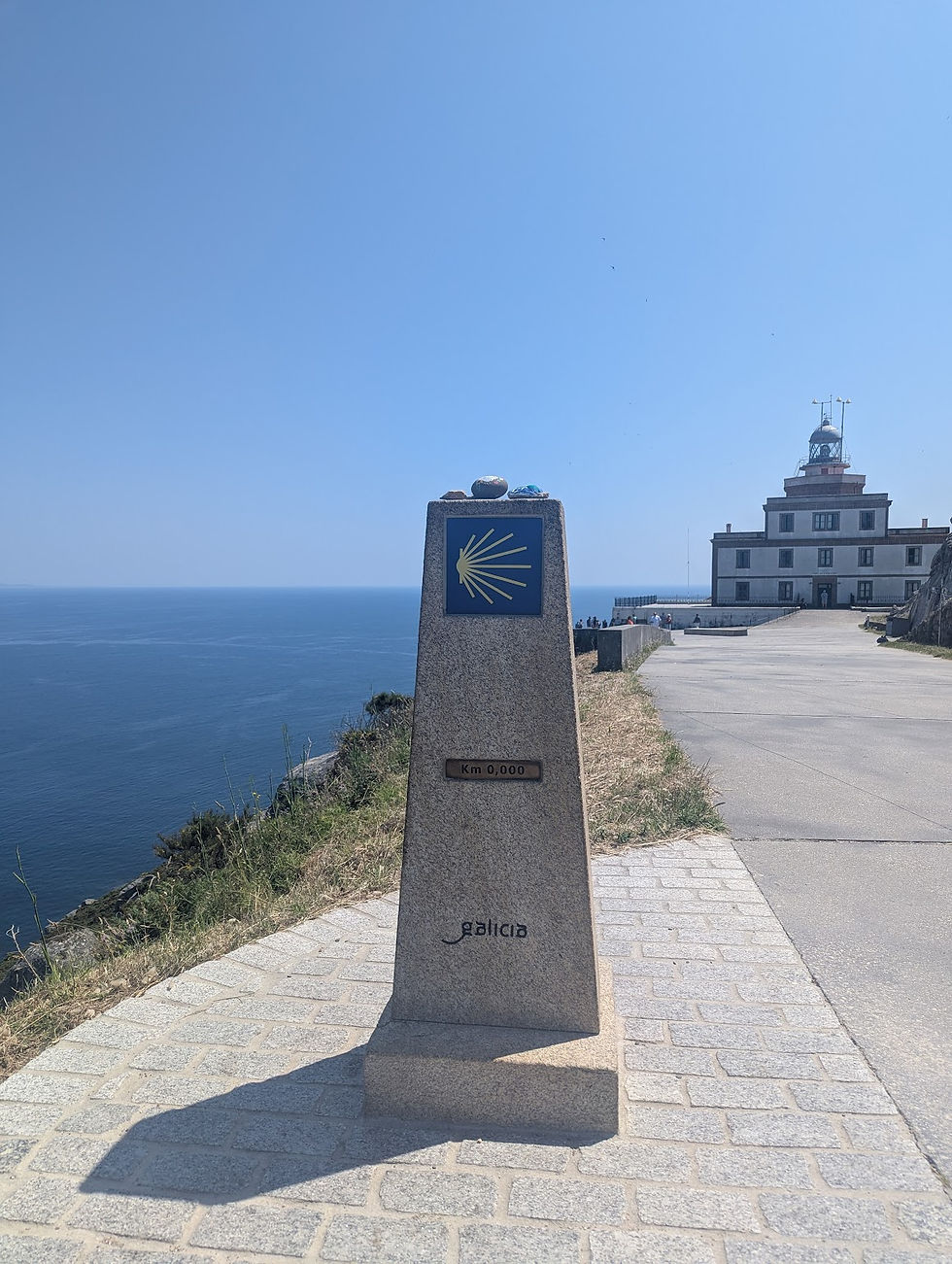
Your pilgrimage officially comes to a close. Some pilgrims continue on to Finisterre or Muxía, while others begin the journey home.
Day 36: Depart Santiago de Compostela
BOOKING OPTIONS
*All prices are from per person, based on twin-share accommodation. $200 discount already. applied
INCLUSIONS
ACCOMMODATION
36 nights in handpicked accommodations (hotels, casas rurales, or guesthouses) with private ensuite rooms
Comfortable beds, hot showers, and local charm
Centrally located stays in Camino towns, ensuring easy access to the route
LUGGAGE TRASNFER
Daily luggage transfer between accommodations (walk with only a daypack)
18kg weight limit per bag
Reliable and secure service—your bag will be waiting at the next stop
MEALS
Hearty breakfasts included at each accommodation
LOCAL EMERGENCY SUPPORT
Emergency phone number in case of issues along the route
Assistance with logistics or medical needs if required
PRE-TRIP PLANNING
Personalised pre-departure consultation to help choose the right Camino route and level of support
Detailed Pre-Departure Guide covering everything from packing to passport stamps
Recommendations for fitness preparation and Camino etiquette
Support with booking arrival and departure logistics (hotels, transfers, rest days)
Ongoing access to our Camino team for advice before your trip begins
ADDED EXTRAS
Upgrade your stay to in Santiago to luxurious Parador from $200 per person/night in twin share room and $300 per person/night in single occupance room
Additional nights in Santiago de Compostela
Alternative and customised routes, sections and days to suit your level of fitness and needs
EXCLUSIONS
Additional baggage transfer cost of $30 per person/day when your trip falls between 31st Ocotober and 31st March
Single Supplement
Flights
Travel insurance

OTHER CAMINOS YOU MIGHT BE INTERESTED IN


.jpg)


%20(1).avif)


.png)
.png)
.png)
.png)
.png)
.png)
